We are Bhutan Coffee
Cooperative
Join us on a journey through the rich flavors and traditions of Bhutan coffee. Sourced from the highest quality beans, our mission is to share the unique story of our coffee – from the farm to your cup. Explore our passion for organic practices and community support as we bring you the best of Bhutan’s coffee heritage.
Bhutan Coffee brings together coffee growers across the country to produce high-quality Arabica coffee while improving livelihoods through sustainable farming and market access.
We work closely with farmers to strengthen production practices, post-harvest processing, quality control, value addition, and marketing, enabling Bhutanese coffee to compete in premium domestic and international markets.
Bhutan Coffee Values
We work alongside Bhutanese coffee farmers to improve cultivation, post-harvest processing, quality assurance, and market access, ensuring the production of exceptional specialty coffee.
We produce high-quality Arabica coffee using sustainable and environmentally responsible farming practices for discerning customers in Bhutan and around the world.
Our coffee is cultivated by dedicated smallholder farmers in Bhutan’s mountain communities, creating sustainable livelihoods while preserving the country’s rich natural environment.
We offer premium Bhutanese Arabica coffee in a range of formats, including coffee cherries, parchment coffee, green beans, roasted beans, and ground coffee, tailored to domestic and international markets.
Our Role
Bhutan Coffee is dedicated to developing a world-class specialty coffee industry by working with farmers, partners, and stakeholders across the coffee value chain. We support sustainable production, quality improvement, processing, branding, and market access to position Bhutan as a premium coffee origin.
Our Values
- Champion sustainable and environmentally responsible coffee farming.
- Empower farming communities through knowledge, innovation, and market access.
- Produce exceptional Bhutanese Arabica coffee with integrity and traceability.
- Promote quality, sustainability, and long-term value across the coffee industry.
Our Coffee
Grown in the Himalayan mountains above 800 metres above sea level, Bhutanese Arabica coffee is cultivated in pristine natural environments using sustainable farming practices. Our coffees offer distinctive flavour profiles with bright acidity, balanced sweetness, and notes of citrus, chocolate, floral, and stone fruits.
We supply coffee cherries, parchment coffee, green beans, roasted beans, ground coffee, and private-label products for domestic and international markets.
Our Vision
To establish Bhutan as a globally recognized origin for premium specialty coffee while creating sustainable livelihoods for farming communities and preserving Bhutan’s natural heritage.
THE COFFEE PROCESS
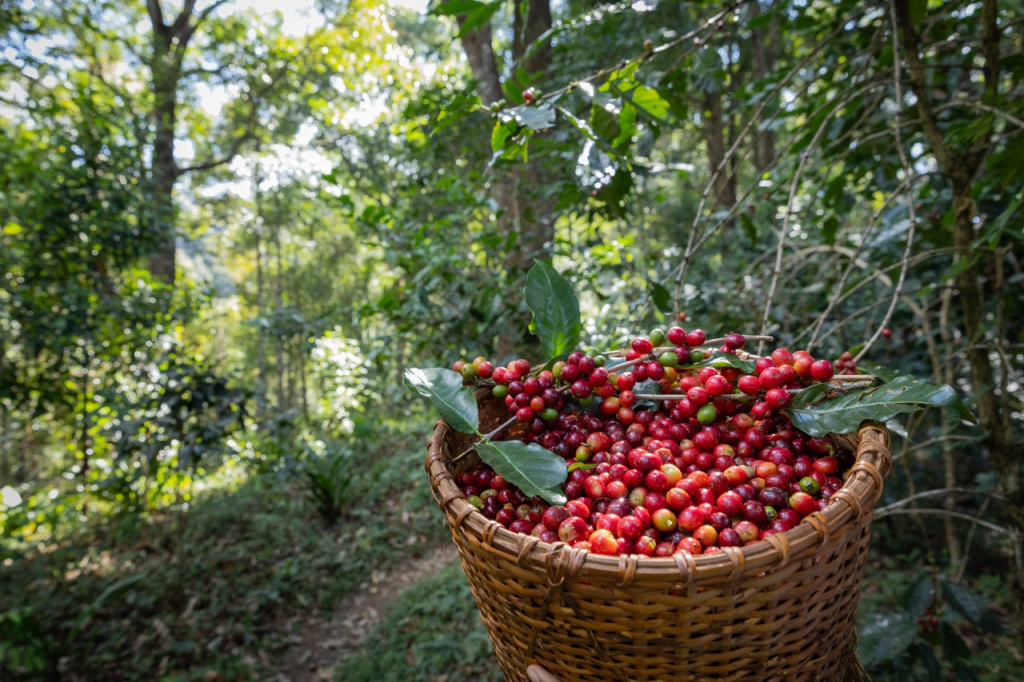
HARVEST RIPE CHERRIES
It might sound simple but coffee cherry-picking is actually a very important stage in the process. First of all, only the cherries at their peak ripeness are to be picked. They have higher aromatic oil and lower organic acid content, are sweet, more fragrant, smooth and mellow.

SORT AND REMOVE FLOATERS
It might sound simple but coffee cherry-picking is actually a very important stage in the process. First of all, only the cherries at their peak ripeness are to be picked. They have higher aromatic oil and lower organic acid content, are sweet, more fragrant, smooth and mellow.
PULP THE CHERRY SKIN
It might sound simple but coffee cherry-picking is actually a very important stage in the process. First of all, only the cherries at their peak ripeness are to be picked. They have higher aromatic oil and lower organic acid content, are sweet, more fragrant, smooth and mellow.
FERMENT FOR BETTER FLAVOUR
It might sound simple but coffee cherry-picking is actually a very important stage in the process. First of all, only the cherries at their peak ripeness are to be picked. They have higher aromatic oil and lower organic acid content, are sweet, more fragrant, smooth and mellow.
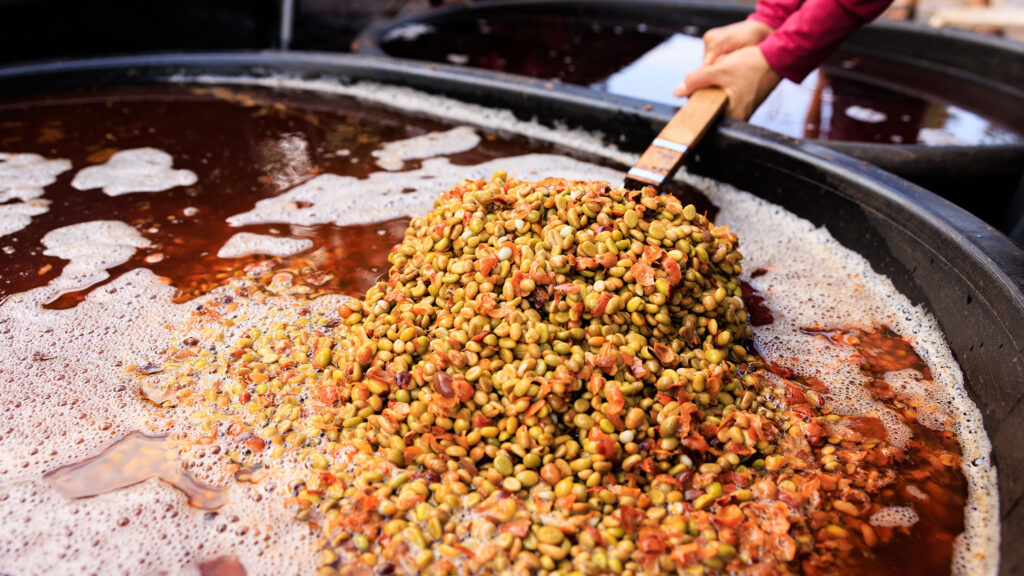
WASH WITH CLEAN WATER
Following fermentation, the seeds are then rewashed, which removes any remaining pulp. At this stage the seeds (beans) contain just over 50% water. In the washing stage the quality of the water is critical, it must be clean, odourless, flavourless, and colourless. Ideally, the processing area should have a fresh-water well or stream.
DRY THE PARCHMENT
In the drying process, time plays an important role. Dried too quickly or too slowly, dried unevenly, dried and then rewetted, not dried sufficiently — all of these factors can be disastrous to the final quality of the coffee. To prevent any mould growing on the coffee bean, their moisture content must be below 12.5% so the seeds are air dried until they are below this level. Once dry, the beans are rested and hulled. This will take 2-3 weeks to finish.

SORT THE DEFECT BEANS
After the coffee is rested and hulled, it is then cleaned and sorted. First by the density of bean and by bean size, and then by colour. The colour sorting may require two or three rounds to complete.
ROAST COFFEE BEANS
This is where the fun begins for the master roaster. It is where they demonstrate their artisanal skill, highlighting their knowledge and expertise as unique roast profiles are created to bring out the very best of each bean type. This means changing roasting temperatures, roasting duration, the rotational speed of the drum and the airflow, etc. For example the coffee bean is roasted by both convection & conduction and getting the ratio right is just one essential parameter to set for achieving the perfectly roasted coffee bean.

BREWING
Now it’s your turn to have fun. There are different methods of brewing, which you can learn more here (linked to the “Brewing Guide” section).

Uniting smallholder Bhutanese coffee farmers for better quality Arabica.
Contact us
Changzamtog,
Thimphu, Bhutan
- Email: hello@bhutan-coffee.com
- Phone: +975 17496021
- Hours: Mon-Fri 9:00AM - 5:00PM
©2026 All Rights Reserved. Bhutan Coffee is a subsidary company registered in Bhutan.